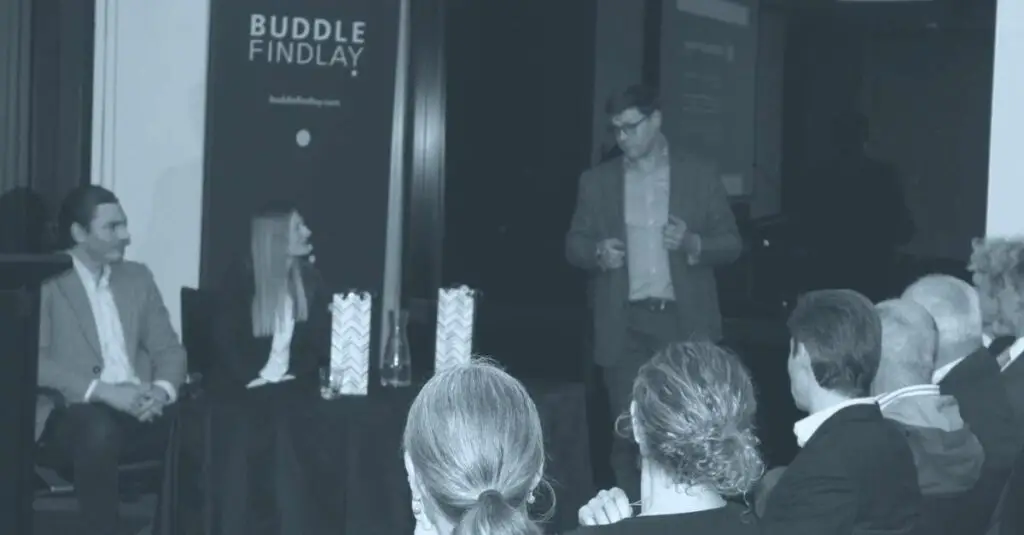

RMA reform and property rights
Speaker: Phil Barry
Wednesday 12 November 2025, 5.30pm-7.30pm
Buddle Findlay, 1 Willis St, Wellington
LEANZ Presentation – Heritage Policy and Practices
Seminars, Webinars & Events happening in the Law & Economics Sector in New Zealand
RMA reform and property rights
Speaker: Phil Barry
Wednesday 12 November 2025, 5.30pm-7.30pm
Buddle Findlay, 1 Willis St, Wellington
LEANZ Presentation – Heritage Policy and Practices
The online casino bill : what’s at stake for Aotearoa New Zealand?
Speakers: Dr Maria Bellringer and Guyon Espiner
Wednesday 24 September 2025, 5.30 pm-7.30 pm
Russell McVeagh, 48 Shortland St, Auckland
LEANZ AGM and Hon Tim Groser seminar on the international rules-based order
Speaker: Hon Tim Groser
Wednesday 2 July 2025, 5 pm-7.30 pm
Bell Gully, 40 Lady Elizabeth Lane, Wellington
Locked out: criminal records and licensing reform
Speaker: Dr Darwynn Deyo
Tuesday 3 June 2025, 5.30 pm-7.30 pm
Buddle Findlay, 1 Willis St, Wellington
Regulating AI in the face of uncertainty
Speaker: Dr Bronwyn Howell
Thursday 13 May 2025, 5.30pm-7.30pm
Russell McVeagh, 157 Lambton Quay, Wellington
Pipe dreams? Enabling and funding housing growth in New Zealand
Speakers: Dr Stuart Donovan and Joey Shannon
Thursday 13 February 2025, 5.30 pm-7.30 pm
KPMG, 44 Bowen St, Wellington
Application of the Bayesian approach to the Polkinghorne trial
Speaker: Dr Martin Lally
Tuesday 3 December 2024, 5.30pm-7.30pm
Bell Gully, 40 Lady Elizabeth Lane, Wellington
Gig/platform workers and contractors: how do they fit in our legal framework?
Speakers: Maria Dew KC and Ben Upton
Wednesday 20 November 2024, 5.30 pm-7.30 pm
Simpson Grierson, 88 Shortland St, Auckland
Assessing the efficacy of competition policy
Speaker: Dr Douglas Rathbun
Tuesday 8 October 2024, 5.30 pm-7.30 pm
Buddle Findlay, 1 Willis St, Wellington
The place of Tikanga Māori in law schools’ curricula
Speakers: Karen Feint KC and Gary Judd KC
Wednesday 7 August 2024, 6 pm-7 pm
Online event
We invite you to submit an academic essay that approaches a contemporary issue using a Law and Economics lens. The essay should apply economic analysis to an existing or possible legal rule or institution and explain the rule’s effects on behaviour. It can discuss whether these effects are socially desirable. The essay can concern any area of law including competition law, regulation, property rights, contracts or public management.
Deadline for submissions is 28 February 2026.
Open to under- and post-graduate university students or recent graduates (enrolled in the 12 months prior to deadline for submissions) of any New Zealand university faculty.
2,000 to 15,000 words with no adverse inferences drawn from essay length, provided the subject matter is well addressed.
Essays that have been submitted for university courses in the 18 months preceding the deadline are eligible.
“Plugging the gaps in consent: standard form contracts and their failings” (2024).
“Devicive: Medical Device Regulation and the New Zealand Therapeutic Products Act 2023” (2023).
“Should the Reserve Bank of New Zealand Continue their Endeavours to Implement a Central Bank Digital Currency for Retail Application” (2022).
“Five-Eyes, Spies and International Ties: A Common Whistleblowing Regime” (2021).
Winner: Nicholas Howell of Auckland University, for his essay titled “Plugging the gaps in consent: standard form contracts and their failings”. (LEANR MORE)
Runner-up: Timothy Fisher-Taylor from the University of Canterbury for his essay titled “Growing gains and shrinking pains under firm size-differentiated regulation”. (LEANR MORE)
Winner: Hugo Young of Victoria University, for his essay titled: “Devicive”: Medical Device Regulation and the New Zealand Therapeutic Products Act 2023”.
Runner-up: Christina Posner of Auckland University, for her essay titled: “The New Zealand-China Double Tax Agreement: Modern China’s Effect on New Zealand’s Treaty Negotiations”
This seminar emphasizes the importance of data-driven approaches to measure positive social change and guide investment decisions in the social sector. Sir Bill English reflects on a decade of using measurement tools to improve policy and operations both within and outside government. He discusses tools that can bridge the gap between well-being policy and better outcomes for service recipients, especially in a tight fiscal environment.
It presents ImpactLab’s tools and methodologies for calculating SROI and measuring impact across various social programs and interventions. Sophie Kunze presents on measuring Social Return on Investment (SROI) as a guide for social investment decisions and operational improvements in the charity sector. She introduces the concept of social value and explains how SROI is calculated using three key drivers: scale, social value, and cost.
She showcases ImpactLab’s work, including:
Luke English provides an overview of ImpactLab’s housing work, which involves a Housing Impact Framework that considers housing interventions, population characteristics, investment tools, and related services.
Download the seminar slides here: ImpactLab x LEANZ Seminar Slides June 2024
Visit ImpactLab’s website here: impactlab.co.nz
This seminar discussed the role of tort law in addressing climate change. it discussed the current landscape of climate litigation, the role of tikanga Māori (Māori common law), and climate change as an intergenerational externality with potential market and regulatory failures. It examined an alternative view inspired by the Coase theorem, suggesting courts could internalize externalities and overcome obstacles to state action. It proposed the concept of “climate comity,” drawing from private international law principles developed by courts for mutual benefit. The seminar also discussed the suitability of tort law to impose responsibility for “unreasonable” emissions or recognise environmental rights, to provide judicial guardrails against inadequate government action on climate change.
Download the seminar slides here: LEANZ Smith v Fonterra April 2024
This seminar explores whether New Zealand’s wholesale electricity market (WEM) is fit for the future as the country transitions towards a highly renewable energy system. It outlines the current WEM structure, including the spot market, hedge market, and ancillary services market. It examines anticipated changes in the physical electricity system, such as the increasing share of intermittent renewables like wind and solar, the growth in distributed energy resources, and the rising demand due to electrification.
It argues that a market-based approach is preferable over centralized approaches as it promotes competition, innovation, and investment efficiency. It proposes recommendations for “WEM 2.0,” including measures to improve accurate pricing, risk management tools, competition, and public confidence. It emphasizes the importance of capturing innovation and enabling demand-side flexibility to optimize the renewable energy transition while maintaining a reliable and cost-effective electricity supply.
Download the seminar slides here: LEANZ Wholesale Electricity Market Slides May 2024
The recommendations are based on the Market Development Advisory Group (MDAG)’s 2023 paper. Read the paper here: Price discovery in a renewables-based electricity system – Final recommendations paper

Tony Baldwin provides advisory and project management services to private and public sector organisations on commercial transactions, strategy, and regulatory policy. He has chaired or project managed a range of major projects, including recent reform proposals by the Electricity Authority’s Market Development Advisory Group; the public float of Genesis Energy (and subsequent M&A transactions); ‘unbundling’ access to Telecom’s local loop network; the deregulation and corporatisation of nine statutory producer boards; and restructuring the electricity industry in the 1990s. Before consulting, Tony was a member of the Policy Advisory Group in the Department of the Prime Minister and Cabinet, and a lawyer at Chapman Tripp in Wellington practicing in corporate and securities law. His details are at www.tonybaldwin.co.nz
David Hunt has worked on a wide range of energy and infrastructure issues for public and private sector clients in New Zealand, Australia and Singapore. He combines rigorous economic analysis with strong practical knowledge and understanding.. David was previously Chief Executive of Contact Energy and, before that, worked for a large Australian energy sector participant. Prior to moving into business, David held senior roles at the NZ Treasury, including Economic Adviser to the Minister of Finance. David is deputy chair of the Accident Compensation Corporation, a director of Christchurch City Holdings Ltd, and an associate at Concept Consulting Group.
The winning essay this year was by James Sinclair titled Should the Reserve Bank of New Zealand Continue their Endeavours to Implement a Central Bank Digital Currency for Retail Application.
Congratulations to James Sinclair and many thanks to Bryce Wilkinson and the other judges for their hard work.
Society is facing many seemingly intractable problems: climate change, mental health crisis, pandemics, wars. Charities and the not-for-profit sector make an important contribution in addressing those problems. They strengthen communities, improve social cohesion and deliver social benefits that complement actions by business and government. Charities play a key role in upholding liberal democratic values.
In order to thrive, the charities sector needs an appropriate legal and economic framework. However, it is often misunderstood by commentators and policy makers. Recent developments in New Zealand and around the world create serious risks for the health of the sector.
In her talk Sue Barker will cover topics including: the role of charities in democratic societies, recent developments overseas and in New Zealand with regard to how governments approach charities and the risks they create, what a world-leading legal framework for charities might look like.
This is an online only event. The speaker will talk for 40-45 minutes followed by some time for Q&A.
Sue Barker is the director of Sue Barker Charities Law, a boutique law firm based in Wellington, New Zealand, specialising in charities law and public tax law. She is a director of the Charity Law Association of Australia and New Zealand and a member of the Core Reference Group for the Government’s review of the Charities Act 2005. Sue is also a co-author of the text The Law and Practice of Charities in New Zealand (LexisNexis, 2013) and a contributor to Regulating Charities: the Inside Story (Routledge, 2017).
In 2019, Sue Barker was awarded the prestigious New Zealand Law Foundation International Research Fellowship, Te Karahipi Rangahau ā Taiao, to undertake research into the question “What does a world-leading framework of charities law look like?”. The report from the Fellowship, “Focus on purpose”, was released in April 2022 making 70 recommendations for charities law reform in Aotearoa New Zealand.
Lawyers may note that if this seminar is part of your learning objectives in your CPDPR, then the seminar can count for one hour of your 10 CPD hours. Please email the LEANZ contact above to request confirmation of your attendance.
The winning entry this year was Nicholas Goldstein for his essay Five-Eyes, Spies, and International Ties: A Common Whistleblowing Regime.
Runner up was Connor Browne, LIFE’S NOT FAIR, BUT PHARMAC IS — DEFENDING PHARMAC FROM ITS CRITICS.
Congratulations to both winners and many thanks to Bryce Wilkinson and the other judges for their hard work.
LEANZ received 24 entries to the essay competition in 2020, a record number of entries. The standard at the top end of the submissions was very high.
The winning entry was Nathan Tse for his essay Decentralised Autonomous Organisations and the Corporate Form. This essay examined the role of decentralised autonomous organisations (DAOs) and asked whether DAOs really improve the corporate form. DAOs ostensibly eliminate agency costs due to the absence of a board of directors, automated governance mechanisms and transparency provided by the blockchain upon which the DAO is launched. Nathan’s analysis suggested several practical and legal obstacles that technological advancements and improved engineering must overcome before DAOs become a viable, mainstream organisational structure. Balancing the inevitable improvement in technology against these significant obstacles, this article predicts an incremental integration of DAOs into society through a hybrid approach, involving interim legal solutions and varying degrees of automation and decentralisation.
Runner up was Chanelle Duley, Democracy or Technocracy?: Policy Delegation and Populism? This paper identifies the incentives faced by elected and appointed policymakers and compares the efficiency of each policymaker’s performance under such incentives.
With thanks to Bryce Wilkinson, Lew Evans, George Barker and Bronwyn Howell for acting as judges.
The University of Auckland Business School kindly extended an invitation for LEANZ members to attend the Dean’s Distinguished Virtual Public Lecture by Nobel Laureate Jean Tirole, Professor at the Toulouse School of Economics, held on Thursday, 3 September 2020.
After a brief introduction by the University of Auckland Business School Dean, Professor Susan Watson, Professor Tirole gave his public lecture, followed by a 30 minutes Q&A session involving a facilitated conversation with invited panellists (including LEANZ’s Vice President Auckland, Dr Richard Meade).
This was a rare opportunity for our members to hear from a distinguished speaker on a topic of great current interest.
To see the video of the session, see: https://www.youtube.com/watch?v=oUZEbP3oHao
For further details about the session, see: http://email.business.auckland.ac.nz/2020/0903-Digital-Dystopia/
A post event discussion as been provided by Donal Curtin here.
LEANZ is thrilled to announce the winners of the 2019 LEANZ essay competition:
Winner ($3,000 prize): Lauren Tyler-Harwood–“Achieving Water Security in the Waimea Plains”
Runner-up (discretionary $1,500 prize): Riki Fujii-Rajani–“Can’t Touch This? Sovereign Debt and the Law of Sovereign Immunity”
Thanks to the judging panel of LEANZ Fellows and committee members:
George Barker, Andreas Heuser, Bronwyn Howell, Michael Littlewood and Bryce Wilkinson
Pictures from the prize-giving event prior to the 4 September 2019 Wellington seminar at Chapman Tripp:

The Law and Economics Association of New Zealand, Inc. (LEANZ) is pleased to announce the winner and commendable runner up of the inaugural LEANZ Essay Competition.
The first prize of $3,000 was awarded to Alex Ross: “Green Bonds Securities Regulation: Towards a Low Carbon Economy”
The discretionary prize for a commendable runner-up prize of $1,500 was awarded to Louis Norton: “Is Defensive Practice Defensible”
The competition was open to current or recent under- or post-graduate New Zealand university students of any discipline. Entries closed on 7 May 2018. The original full entry criteria and information here. Please keep an eye out for announcements for the 2019 LEANZ Essay Competition.
LEANZ has awarded two scholarships of $10,000 each for overseas study of law and economics in the academic year 2013-2014.
The Friedlander Foundation Scholarship, generously funded by the Friedlander Foundation, is awarded to Samuel Beswick of Auckland who is to read for an LLM at Harvard.
A C W Maughan Scholarship, funded by members of LEANZ, is awarded to Richard Davidson of Wellington who is to read for an LLM at Toronto.
LEANZ is delighted to be able to assist two candidates of such excellent calibre and looks forward to their future contributions to law and economics in New Zealand.
The Law and Economics Association of New Zealand today expresses its sadness at the death its inaugural Patron Sir Ivor Richardson.
The Association’s tribute to Sir Ivor is here.
Sir Ivor provided a characteristically careful and acute introductory address to the LEANZ Symposium on 16 September 2014 which is re-published here.
The Law and Economics Association of New Zealand (LEANZ) wishes to give notice to its members of its 2012 Annual General Meeting.
Venue: Kensington Swan, 89 The Terrace, Wellington (with a video link to Kensington Swan, 18 Viaduct Harbour Avenue, Auckland)
Nomination for 2012/13 Committee
Nominations are sought for the following positions on the LEANZ Executive Committee for 2012/2013:
• President
• Vice President (two positions available)
• Secretary
• Treasurer
• Committee member (four positions available)
In addition to the elected Committee, the Committee may co-opt up to four non-elected members. The positions will be elected at the AGM. If you would like to make a nomination, please complete the form here and return it to the Secretary by post or fax (details below). The Secretary must receive your nomination no later than 5.00pm on Monday 28 May 2012.
Anna Parker
LEANZ Secretary
PO Box 2694
Wellington
Fax: 04 462 0858
The conference will now be held on the 28th & 29th of May at the InterContinental in Wellington.
See the upcoming conferences page for details.
LEANZ is now on Facebook! Search “Law and Economics Association New Zealand” and add us as a friend. The page contains updates, discussions and links to items of interest.
The Patron of the Law and Economics Association of New Zealand, Sir Ivor Richardson, former President of the Court of Appeal, presented Matthew Palmer, Deputy Solicitor-General (Public Law) with the certificate recording his admission as a Fellow of the Association at the Annual General Meeting of the Association on 28 June.
The prime requirement for Fellowship is the publication of at least 100,000 words which advance the study or understanding of law and economics issues in or with reference to New Zealand. Fellows may use the post-nominal LEANZF. Matthew Palmer has published a number of papers on ex-socialist economies and also written on economic analysis of constitutional institutions. Matthew Palmer was the founding Secretary of the Association in 1994.

Photo credit: Sally Wyatt
Professor Lew Evans, LEANZ Fellow, has been appointed an ONZM in the New Years Honours List for services to education.
Louis Norton’s entry was entitled: “Is Defensive Practice Defensible”
LEANZ recently held its Annual General Meeting on the 28th of June, 2011. The AGM was hosted by Russel McVeagh, with a video link to Auckland. After the AGM, Dr Russell Norman MP and Dr Jason Potts (University of Queensland) debated the utility of Happiness Indexes.
If you have content that would meet the content criteria below, email our Editor at [email protected]. Any publication is subject to the discretion of the Editor and will be in accordance with the LEANZ Corner editorial policy. To view the current policy, click the button below.
• Content will primarily focus on ideas and perspectives related to law and economics. This is interpreted broadly to include institutions (e.g., laws, regulations, social norms, etc.) that affect incentives, behaviours, and outcomes.
• Content will also include topics our members may be interested in, that overlap with law and economics.
• Content must be based on credible sources to avoid spreading misinformation or inaccurate data.
• The Corner aims to promote an open and inclusive platform for various perspectives within the field of law and economics. We encourage diverse opinions and arguments and maintain respectful, robust, and reasoned debate.
• Ensure the credibility and reliability of external sources.
• Acknowledge and credit the original content source: provide a link to the original content and contact the original creator if necessary.
Seminars, Webinars & Events happening in the Law & Economics Sector in New Zealand

$3,000 prize + discretionary $1,500 prize for a commendable runner-up We invite you to submit an academic essay that approaches a contemporary issue using a Law and Economics lens. The

“Plugging the gaps in consent: standard form contracts and their failings”. – Nicholas Howell from Auckland University

“Devicive”: Medical Device Regulation and the New Zealand Therapeutic Products Act 2023”. – Hugo Young from Victoria University

The winning essay this year was by James Sinclair titled Should the Reserve Bank of New Zealand Continue their Endeavours to Implement a Central Bank Digital Currency for Retail Application.


The winning entry this year was Nicholas Goldstein for his essay Five-Eyes, Spies, and International Ties: A Common Whistleblowing Regime. Runner up was Connor Browne, LIFE’S NOT FAIR, BUT PHARMAC


LEANZ received 24 entries to the essay competition in 2020, a record number of entries. The standard at the top end of the submissions was very high. The winning entry


LEANZ is thrilled to announce the winners of the 2019 LEANZ essay competition: Winner ($3,000 prize): Lauren Tyler-Harwood–“Achieving Water Security in the Waimea Plains” Runner-up (discretionary $1,500 prize): Riki Fujii-Rajani–“Can’t


This seminar emphasizes the importance of data-driven approaches to measure positive social change and guide investment decisions in the social sector. Sir Bill English reflects on a decade of using

LEANZ has awarded two scholarships of $10,000 each for overseas study of law and economics in the academic year 2013-2014. The Friedlander Foundation Scholarship, generously funded by the Friedlander Foundation,

The Law and Economics Association of New Zealand today expresses its sadness at the death its inaugural Patron Sir Ivor Richardson. The Association’s tribute to Sir Ivor is here. Sir

The Law and Economics Association of New Zealand (LEANZ) wishes to give notice to its members of its 2012 Annual General Meeting.

The conference will now be held on the 28th & 29th of May at the InterContinental in Wellington. See the upcoming conferences page for details.

LEANZ is now on Facebook! Search “Law and Economics Association New Zealand” and add us as a friend. The page contains updates, discussions and links to items of interest.

The Patron of the Law and Economics Association of New Zealand, Sir Ivor Richardson, former President of the Court of Appeal, presented Matthew Palmer, Deputy Solicitor-General (Public Law) with the

Professor Lew Evans, LEANZ Fellow, has been appointed an ONZM in the New Years Honours List for services to education. Louis Norton’s entry was entitled: “Is Defensive Practice Defensible”

LEANZ recently held its Annual General Meeting on the 28th of June, 2011. The AGM was hosted by Russel McVeagh, with a video link to Auckland. After the AGM, Dr